Win everything around the interview, so the interview is all that's left.
Most candidates prepare for the questions and improvise everything else — the route, the outfit, the lobby, the coffee. But interviewers read all of it. This manual covers the whole day, from the night before to the thank-you note, so the only variable left is the conversation itself. That part, you practice here.

The day before: remove every unknown you can
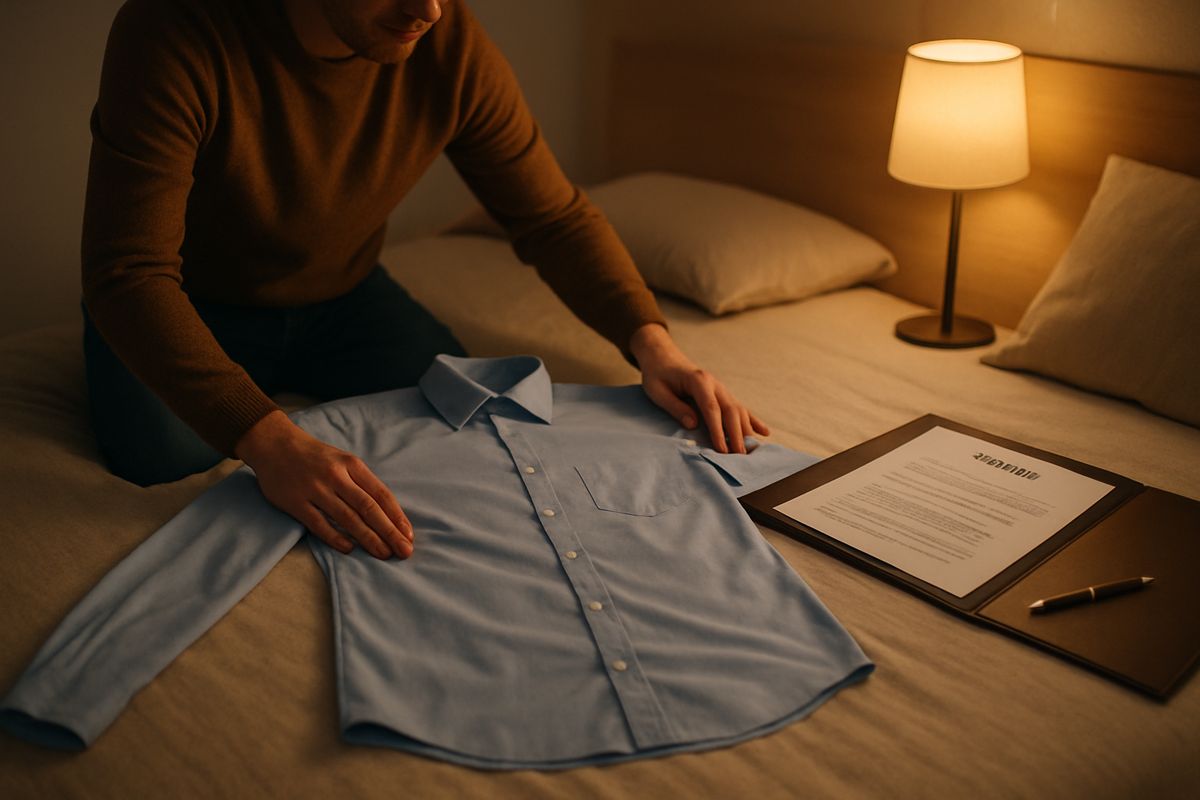
Interview-day stress is mostly accumulated unknowns. Kill them in advance:
- Re-read everything — the posting, your own CV (they'll quote it at you), your research on the company. If you practiced here, skim your last debrief: the mistakes you made in rehearsal are the ones to not repeat tomorrow.
- Scout the location — not just the address: the building entrance (big campuses have several), which tower, which floor, whether there's a security desk, where you'd park or which station you'd exit. Street View is your friend.
- Prepare the outfit tonight — tested, clean, ironed, hanging ready. Never a morning decision.
- Pack your folder — a few printed copies of your CV, a notepad and pen, and any work samples. Bringing them signals organization; needing them and not having them is the opposite.
- Sleep — your voice analysis here has shown you what tiredness does to pace and filler words. Interviewers hear it too.

Arrival: never late — and not too early either

Never late is an engineering problem, not a promise. You're traveling to an unfamiliar place, in unfamiliar traffic, at a specific hour you've never driven it. So plan it like an operation: check the route at that time of day, add a real buffer, and decide where you'll burn spare time nearby if you're early — a café around the corner, not their lobby.
But don't walk in too early. People are working; they're not ready for you. Arriving 30 minutes early doesn't read as eager — it puts you in a chair, in everyone's peripheral vision, in that uncomfortable waiting position, sometimes visibly sweating the wait.
The two-minute rule: appear in front of your contact about two minutes before the meeting starts. That's after you found the right entrance, passed security, took the correct elevator and reached the right door — every one of those steps costs time in a building you don't know. Budget them all. Be in the area early; be at the door almost exactly on time.
If the building is big or security is slow, presenting yourself at reception ~10 minutes before is the practical ceiling — the common career-office convention — and let them walk you the last stretch.

Dress so they can't tell you from an employee

Every company has a dress culture, and it's findable: their careers page, team photos, LinkedIn posts, employees' profiles, even their Instagram. Find out what the people who work there actually wear.
The goal: if you walked in and nobody could tell you from someone who already works there — that's the best outcome you can achieve. "One of us" is exactly what they're trying to imagine. Some experts add: one small level above the everyday norm, never more.
- Practical fabrics win — choose clothes that don't show every drop and crease. The interview may catch you on a rainy day, on an unfamiliar route, arriving wetter than planned. It happens to everyone; dark, forgiving fabrics and an umbrella in the bag make it a non-event.
- Grooming is the baseline — clean, fitted, ironed beats expensive every time.
- Comfort matters — you'll think better in clothes you've actually worn before. Never debut shoes at an interview.

You're on from the parking lot

The interview doesn't start in the interview room. Everything you do on-site reveals information about you — so make the scenery work in your favor:
- The elevator is not private. You don't know who's standing next to you — it may be your interviewer, their boss, or the person they'll ask "what did you think of the candidate in the lobby?". No phone calls where you can be overheard, no venting, no last-minute salary strategizing out loud.
- The receptionist's opinion counts. Many hiring managers explicitly ask front-desk staff how candidates behaved. Warm, brief, respectful — to everyone.
- Waiting room posture: phone silenced and away, sit like someone who's calm. Re-reading your printed CV looks better than scrolling.

Coffee, water, and the restroom

- When offered coffee — politely pass. It makes someone serve you, it's a spill risk over your interview clothes, and it's one more thing to manage with your hands. If they insist, accept graciously — never make it awkward.
- Self-serve is different: if the machine is right there and you can make it yourself, that's fine — the rule is simply don't have others do it for you.
- Bring your own: a small bottle of water always; your own coffee in a travel cup beforehand if you need the caffeine. Hydrated voice, no favors owed.
- Restroom before — non-negotiable. Go before you announce yourself. It's also your last mirror check and thirty seconds of quiet to breathe.

The first 30 seconds are disproportionately loud

Research keeps finding the same uncomfortable fact: interviewers form working impressions within the first seconds and then spend the interview confirming them. Stack that opening deliberately:
- Stand to greet, firm handshake, real eye contact, a genuine smile.
- Use their name when you greet them — and remember it (write it down the moment you sit, if you're bad with names).
- Shoulders back, unhurried movements. You rehearsed; act like it.
- A prepared opening line beats an improvised one — you already mastered "tell me about yourself" in the warm-up. That's usually the first question; land it.

In the room

- Listen to the whole question before composing the answer. A two-second pause reads as thoughtful, not slow — you know this from practice.
- Structure long answers — situation, what you did, what it produced. Numbers where you have them. Your model answers here were built exactly this way; reuse them.
- It's a conversation, not a defense. Interviewers hire people they can imagine working with. React to what they say; reference things they told you.
- Never fake knowledge. "I haven't worked with that — here's the closest thing I've done, and how I'd close the gap" beats a bluff every single time.
- Ask real questions at the end. Not asking reads as not caring. Good ones: "What does success in this role look like in six months?", "What's the team's biggest challenge right now?", "How would you describe the way the team works day to day?", "What do you personally enjoy about working here?"

Closing & after: the follow-through most candidates skip

- Close with intent: thank them, say plainly that you want the role, and ask about next steps and timeline. Get the interviewer's name and email if you don't have it.
- Thank-you email within 24 hours — short, specific, referencing one real moment from the conversation. It's not a formality: surveys show most hiring managers weigh it, and some drop candidates who skip it entirely.
- Log it while it's fresh: the questions they asked, what landed, what didn't — save the contact and debrief yourself the way this product debriefs your practice. If a question beat you, add it to your next practice round here.
The morning-of checklist
Everything else is the conversation itself.
And that's the part you can rehearse until it can't surprise you.
Practice the interview